Excise tax deadlines can be easy to miss, especially when your business handles multiple tax categories such as fuel tax, environmental tax, communications tax, air transportation tax, retail tax, tire tax, PCORI fees, or other federal excise taxes. Unlike annual income tax filing, many excise taxes are reported every quarter using IRS Form 720, Quarterly Federal Excise Tax Return.
Missing a Form 720 deadline can lead to penalties, interest, IRS notices, and unnecessary compliance stress. That is why every business responsible for federal excise taxes should track the right filing dates before each quarter ends.
With Excise720, businesses can file Form 720 online through a secure platform with step-by-step guidance, IRS e-filing, filing confirmation, and support for multiple Form 720 tax types.
What Is IRS Form 720?
IRS Form 720 is used by businesses to report and pay certain federal excise taxes. The IRS instructions state that Form 720 and its attachments are used to report liability by IRS number and pay excise taxes listed on the form.
Businesses may need to file Form 720 if they are liable for, or responsible for collecting, federal excise taxes listed in Part I or Part II of the form. This can apply to industries dealing with taxable fuel, air transportation, communications services, environmental products, imported taxable products, tires, indoor tanning services, PCORI fees, and other excise tax categories.
Form 720 Filing Deadlines You Shouldn’t Miss
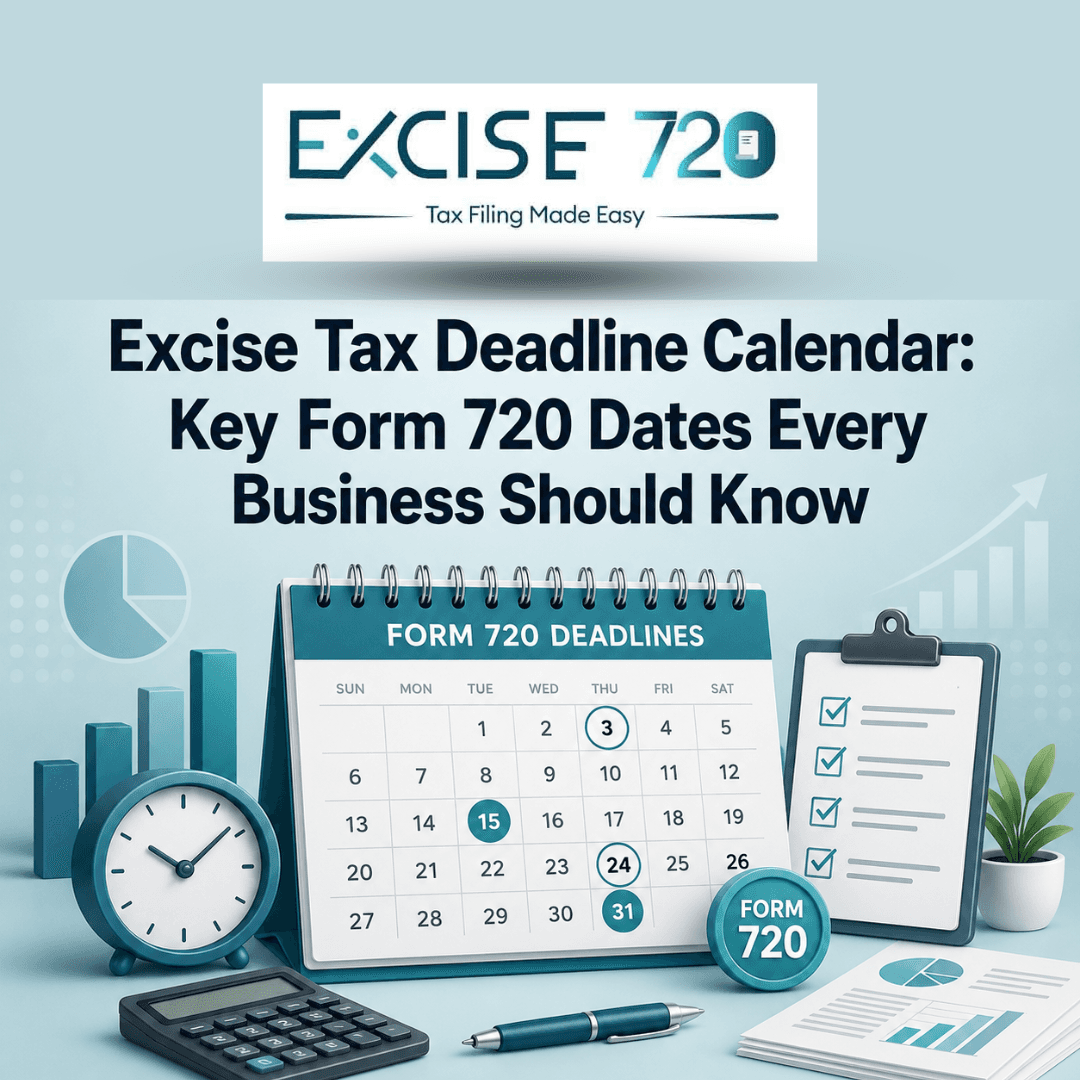
Form 720 is generally filed every quarter. The IRS Form 720 instructions list the quarterly deadlines as follows:
Quarter
| Quarter | Period Covered | Form 720 Due Date |
| Q1 | January – March | April 30 |
| Q2 | April – June | July 31 |
| Q3 | July – September | October 31 |
| Q4 | October- December | January 31 |
If the deadline falls on a Saturday, Sunday, or legal holiday, the IRS allows the return to be filed on the next business day.
Why These Dates Matter for Businesses
Many business owners assume tax deadlines only matter once a year. But Form 720 is different. If your business has quarterly excise tax liability, you must stay ready throughout the year.
A missed excise tax deadline can create problems such as:
- Late filing penalties
- Interest on unpaid taxes
- IRS notices
- Cash flow pressure
- Filing corrections
- Recordkeeping issues
- Compliance delays
Excise720’s Form 720 page also notes that filing on time is important to avoid penalties, interest, and IRS notices.
Important Form 720 Deadlines by Tax Type
Not every excise tax works exactly the same way. Some are filed every quarter, while others have special timing rules.
1. General Quarterly Excise Taxes
Most Form 720 excise taxes follow the standard quarterly filing cycle. These may include taxes related to fuel, air transportation, communications services, retail tax, manufacturers tax, environmental tax, and other taxable goods or services.
The IRS states that businesses must file Form 720 for each quarter of the calendar year when they have Form 720 tax liability.
2. PCORI Fee Deadline
The Patient-Centered Outcomes Research Institute fee, commonly called the PCORI fee, is reported on Form 720, but it is usually filed annually rather than every quarter.
According to IRS guidelines the PCORI fee must be filed and paid using the second quarter Form 720, due no after July 31 in the year calendar that follows the end of the plan year or policy year. If a company files Form 720 only to report the PCORI charge, it usually doesn’t need to fill out Form 720 for the first or third quarter, unless there are additional tax obligations related to excise.
3. ODC Floor Stocks Tax Deadline
Ozone-depleting chemical floor stocks tax has a special timing rule. The IRS instructions state that floor stock tax on ozone-depleting chemicals, IRS No. 20, is reported on the Form 720 return due by July 31 each year, while the tax payment is due by June 30.
4. Deposits for Certain Excise Taxes
Some excise taxes may require deposits before the Form 720 return due date. The IRS instructions say that, in general, semimonthly deposits of excise taxes are required, although certain exceptions apply, such as when the net liability for Part I taxes does not exceed $2,500 for the quarter or when the PCORI fee is paid with the second-quarter Form 720.
This is why businesses should not wait until the final Form 720 due date to review tax liability. Some tax categories may need earlier payment action.
Common Excise Tax Filing Mistakes
Even businesses that know the deadline can still make filing errors. Here are some common issues to avoid.
Waiting Until the Last Week
Form 720 can involve multiple tax categories, IRS numbers, schedules, attachments, and payment details. Waiting until the final week can lead to rushed entries and missed information.
Using the Wrong IRS Number
Each excise tax category has a specific IRS number. Reporting the tax under the wrong category can create filing confusion and may require correction.
Forgetting Supporting Forms or Schedules
Some Form 720 filings may require additional forms or schedules. Excise720 supports Form 720 filing with multiple tax types, Schedule C claims, Schedule A and T, and forms such as 6627, 6197, and 8849.
Assuming “No Tax” Means “No Filing”
If your business has been filing Form 720 and no longer owes future excise taxes, you may need to file a final return. The IRS instructions explain that a final return should be filed if you go out of business or will not owe Form 720 excise taxes in future quarters.
Not Keeping Records
The IRS instructions state that businesses should keep copies of returns, records, and accounts of transactions to show that the correct tax was paid, and records should generally be kept for at least four years from the relevant date.
Form 720 Deadline Checklist
Before each Form 720 due date, review this checklist:
- Confirm which excise tax categories apply to your business
- Check the correct quarter and due date
- Gather sales, usage, import, fuel, policy, or transaction records
- Identify the correct IRS number for each tax
- Prepare any required schedules or attachments
- Review whether deposits are required before filing
- Confirm your tax calculation
- File Form 720 before the deadline
- Keep confirmation and records for future reference
This simple process can help your business avoid last-minute mistakes and stay ready for every quarter.
How Excise720 Helps You File on Time
Excise720 was created to facilitate Form 720 filing easier for companies that require a quicker and more efficient method to submit tax returns online. The platform allows an online secure filing system, step-by-step instructions as well as confirmation of the filing.
Excise720 also provides a straightforward filing procedure which includes registration, logging into to file, pay and then submit. This allows businesses to complete Form 720 filing in an organized and clear manner.
If you’re required to file quarterly taxes on excise or PCORI fees or tax on environmental impacts, gasoline tax, or even a tax-free return, Excise720 will help you make it easier and ease the burden of manual filing.
Final Thoughts
Excise tax deadlines are not something businesses should leave until the last minute. . Form 720 adheres to an annual filing schedule and some tax categories might require special reporting or payment regulations. By keeping track of the correct deadlines and filing your tax returns early and making use of a reliable online filing system you can ensure your business is in compliance and avoid any unnecessary IRS problems.
Are you required to fill out Form 720? Excise720 can help you file your federal tax return online quickly, accurately, and securely.