You have your Q3 figures ready.
July, August, and September are accounted for. Your deposits look fine. You start working through Form 720 and then reach Schedule A.
This is often the point where the filing slows down.
Schedule A is not especially complicated, but one small misunderstanding can put the wrong liability in the wrong period. Before filing your Q3 return, it is worth checking a few common mistakes.
First, What Does Schedule A Actually Show?
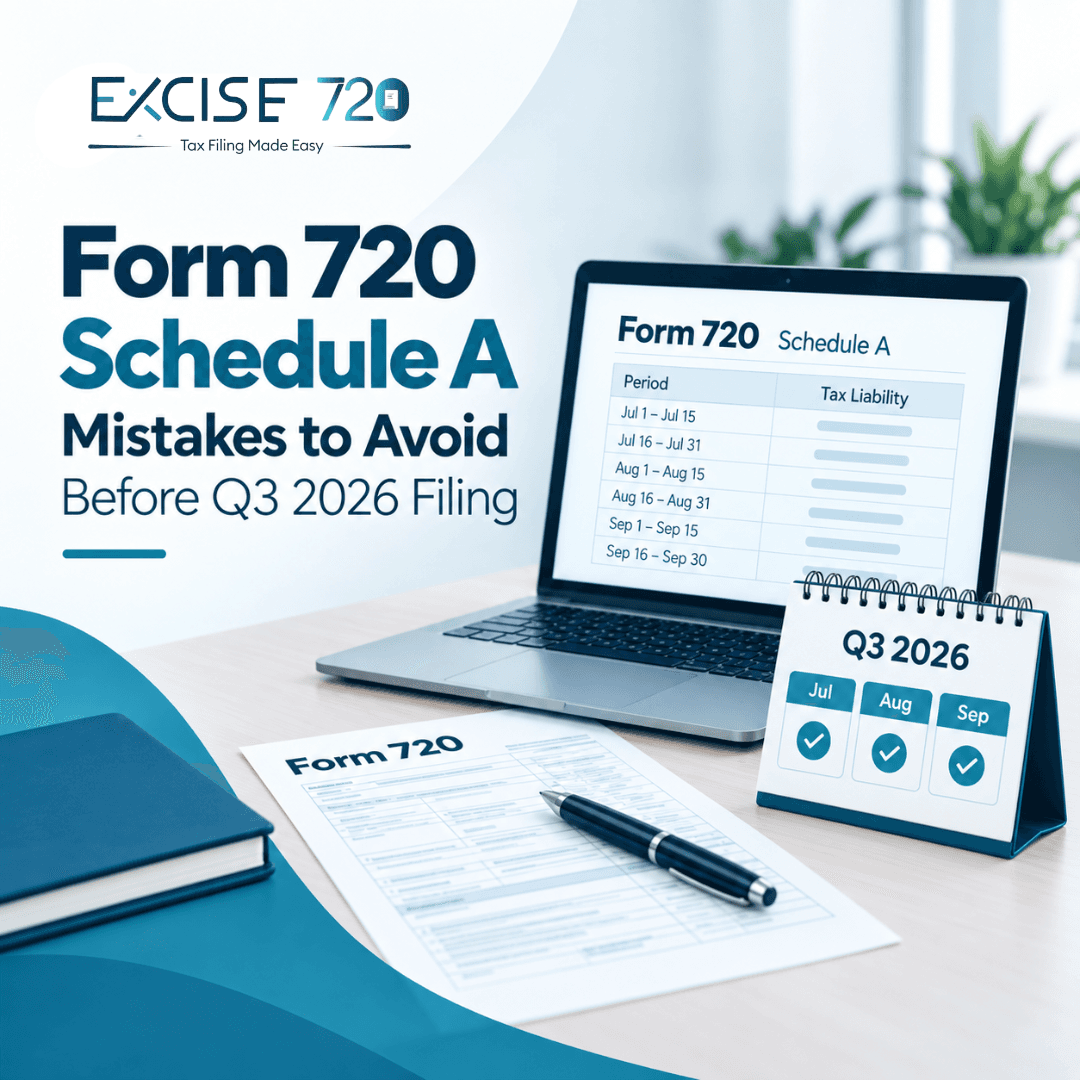
Schedule A records the net tax liability for certain Part I taxes by semimonthly period.
That means it is showing when the tax liability arose, not simply when you made a payment.
The IRS requires Schedule A to be completed for Part I liabilities even when the quarterly net liability is below $2,500.
If you need a quick refresher on the main return, see the Form 720 filing guide.
Mistake 1: Entering Deposit Amounts Instead of Tax Liability
Imagine your business had a tax liability during the first half of August, but the payment was made a few days later.
It can be tempting to report the amount based on the payment date.
That is not what Schedule A is asking for.
The liability should be recorded in the semimonthly period when it arose. Your payment date is separate.
This distinction matters because Schedule A is designed to show the timing of the liability itself.
Mistake 2: Using the Wrong Semimonthly Period
For the regular deposit method, the quarter is generally divided into:
- 1st through the 15th
- 16th through the end of the month
If a transaction happened on August 14, for example, it belongs to the first semimonthly period. A transaction on August 20 belongs to the second.
It sounds simple, but when several deposits are involved, these dates can easily get mixed together.
The IRS uses different Schedule A boxes depending on whether you use the regular method or the alternative method.
You can also review the relevant federal excise tax types before starting.
Mistake 3: Forgetting That September Is Different
September is where things become a little more interesting.
For 2026, the IRS has a special September deposit rule for certain taxes. Under the regular method, the special deposit period runs from September 16 through September 26, with the deposit due September 29. Different dates apply under the alternative method.
So if you are filing Q3, do not assume the second half of September works exactly like a normal month.
For taxes involving communications and air transportation, you can review the communications and air transportation tax page.
Mistake 4: Splitting the Quarterly Total Evenly
Suppose your total Q3 liability is $9,000.
That does not automatically mean you should divide it evenly across the quarter.
Schedule A should reflect your actual liability for each semimonthly period.
The IRS does allow the monthly liability to be divided by two in certain circumstances, but that method must be used consistently throughout the quarter.
Your business records should always be the starting point.
Mistake 5: Forgetting to Check the Final Total
Before filing, compare your Schedule A total with the related Part I liability on Form 720.
If the numbers do not line up, stop and check the entries again.
Look at:
- The correct tax type
- Semimonthly liability
- September entries
- Deposits already made
- Any Schedule C claims
- Your final Part I total
A five-minute check here can save you from having to correct the return later.
What About the Alternative Method?
The alternative method is available for certain communications and air transportation taxes.
Under this method, deposits can be based on amounts billed or tickets sold instead of tax actually collected. The IRS also requires separate records when this method is used.
If your business reports these taxes, make sure you know which method you are using before completing Schedule A.
A Simple Way to Check Schedule A Before Filing
Before you submit Q3 Form 720, ask yourself three questions:
Did I report liability rather than simply copying my deposits?
Did I put each amount in the correct semimonthly period?
Does my Schedule A total agree with Form 720?
If those three points are right, you have already avoided many of the common Schedule A problems.
File Form 720 Online With Excise720
If you are preparing your Q3 return, Excise720 lets you complete Form 720 and applicable schedules online.
You can enter your tax details, review your filing, and electronically submit the return.
You can also check the Form 720 pricing before you start.
For official Schedule A and deposit instructions, refer to the IRS Instructions for Form 720.
Frequently Asked Questions
What is Form 720 Schedule A used for?
Schedule A records net tax liability for certain Part I taxes by semimonthly period.
Is Schedule A based on payment dates?
No. It is mainly based on when the tax liability arose.
Does September have different Schedule A rules?
Yes. Certain taxes are affected by the special September deposit and reporting rules.
What if I use the alternative deposit method?
Different Schedule A boxes and timing rules apply to qualifying communications and air transportation taxes.
Can Schedule A be filed online?
Yes. It can be submitted as part of an electronically filed Form 720 return.